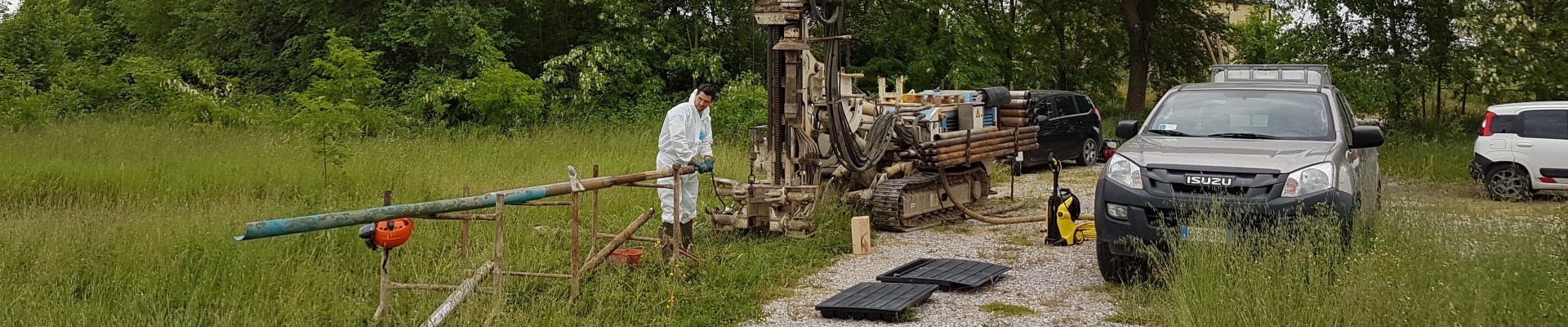
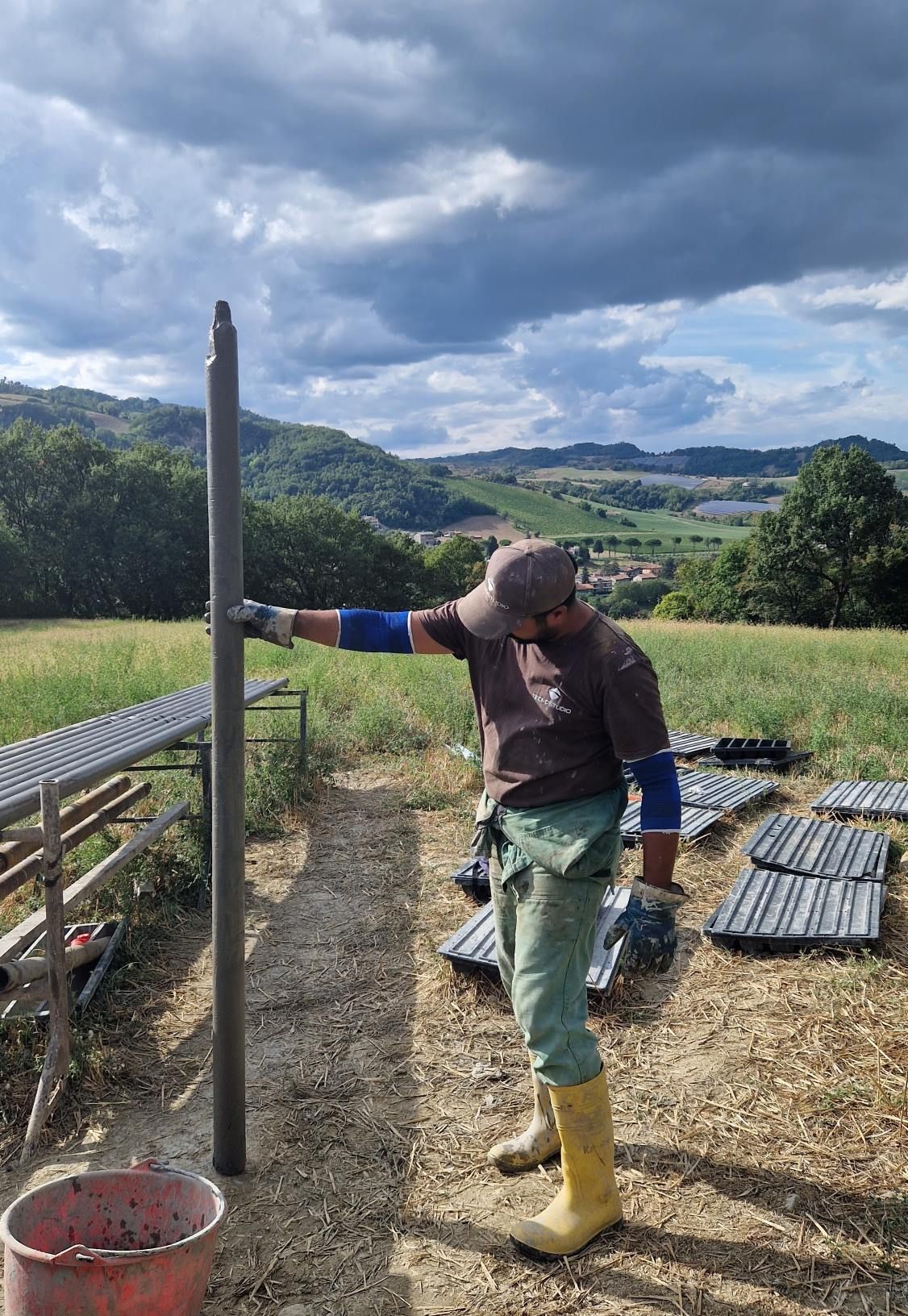
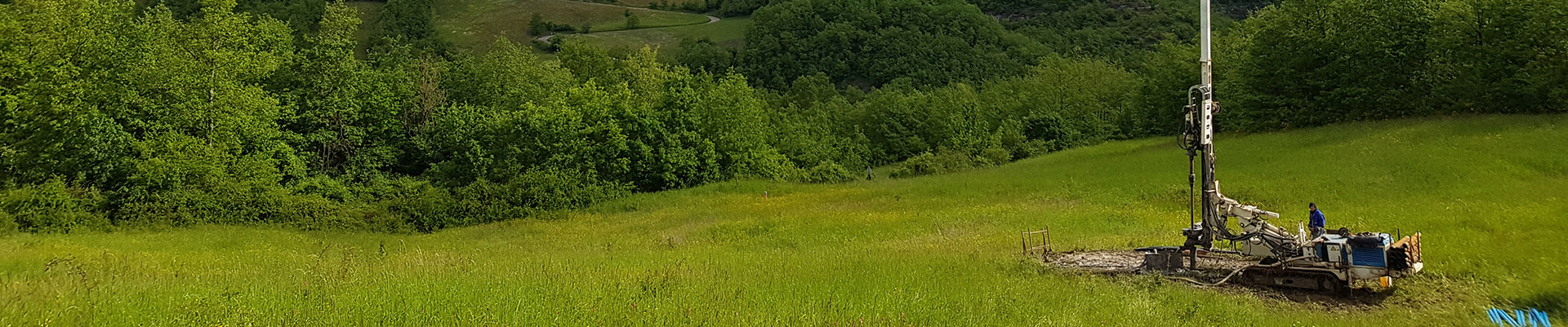
Geognostic boreholes are an "in situ test" carried out to investigate the subsurface.
Boreholes allow us to collect soil samples from the ground surface down to the desired depth. Soil is extracted from the core barrel and catalogued in dedicated boxes. At the end of drilling, the recovered soil is identified to describe the stratigraphy and to perform simple mechanical tests.
Compared to other investigation techniques, boreholes allow sampling of any type of soil: clays, gravels, rock.
The purpose of boreholes is multiple:
During drilling it is possible to perform "in-hole tests" of various kinds:
Boreholes are typically used in geognostic campaigns (i.e. to characterise the geology of an area), environmental investigations (assessment of the environmental quality of a site, i.e. checking for possible contamination) and preliminary investigations for excavated soil and rock (sampling to verify whether the material excavated during construction works can be reused).
Metodologia
Geognostic boreholes are performed in compliance with the Italian Technical Standards for Construction (NTC 2018 — Ministerial Decree 17/01/2018) and the recommendations of AGI (Italian Geotechnical Association). Drilling is carried out by continuous coring with single or double core barrels, in accordance with EN ISO 22475-1, ensuring the recovery of undisturbed and disturbed samples for subsequent laboratory analysis.
Operations include the stratigraphic description in compliance with EN ISO 14688 for soils and EN ISO 14689 for rocks, the execution of in-hole tests (SPT, Lefranc and Lugeon permeability tests) and the installation of piezometers for groundwater monitoring. Each phase is documented with field sheets and stratigraphic logs in line with standardised practice.
Gallery


Request a Quote
Got a project that requires geognostic investigations or geotechnical consulting? Contact us for a tailored, no-obligation quote.
Contact Us Now