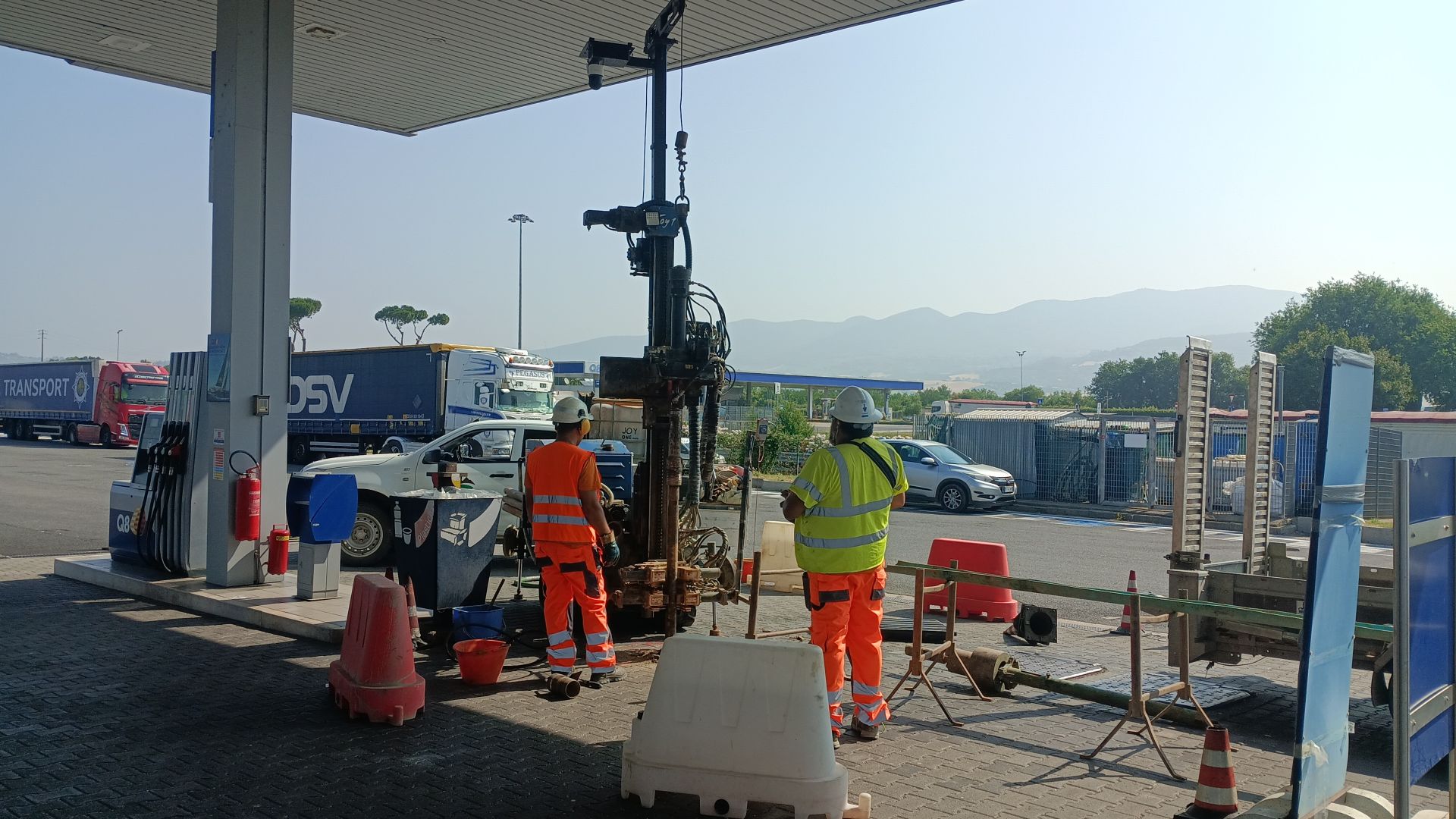
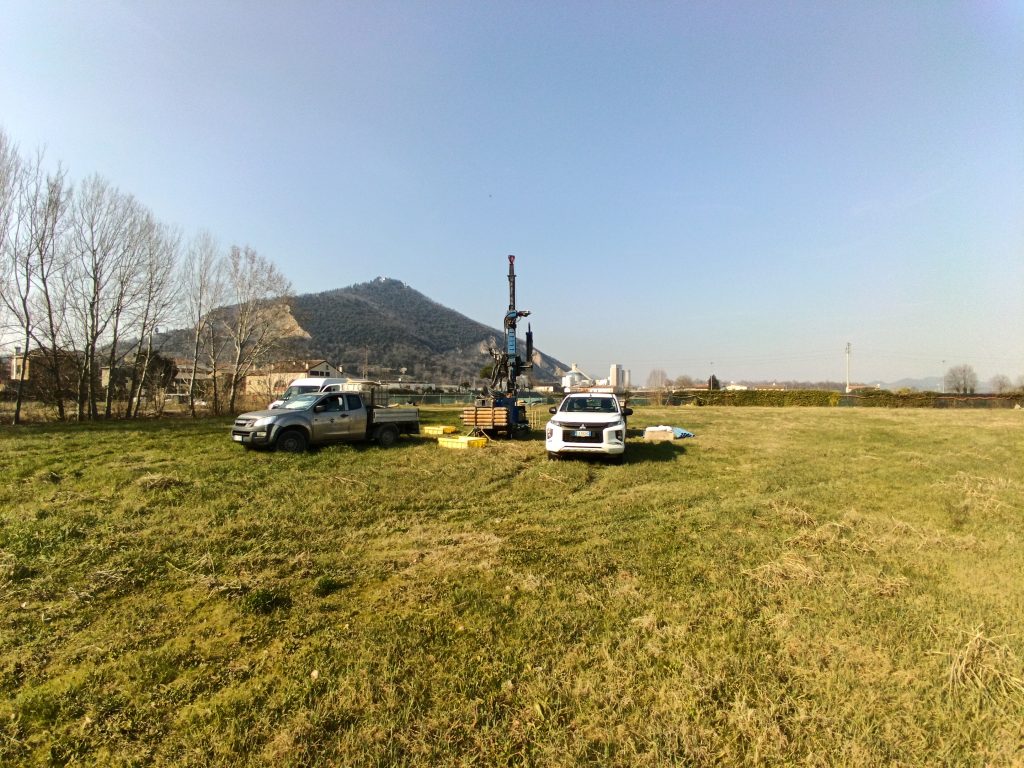
The Italian territory is, unfortunately, often affected by pollution events. Pollution can be caused by multiple factors, for example: rupture of buried tanks, unintentional spillage of liquids on the ground (e.g. during a road accident), unauthorised waste burial, discharge of industrial effluent into the water network.
The law governing environmental matters is Italian Legislative Decree 152/2006. This law defines the procedures to be followed in the event of a pollution event being verified or discovered.
To correctly characterise potentially polluted subsurface, the following are required:
Through the investigations carried out at the site it is possible to identify the source and extent of the contaminant, and therefore to take action to remedy the pollution event by remediating the contaminated site.
Environmental investigations are not limited only to polluted sites; they can also be performed during routine monitoring next to or within productive areas such as industrial zones and warehouses, fuel service areas and agricultural lots.
Excavated soil and rock are all those materials removed during any type of engineering works (buildings, road or railway networks, underground works). Such material is not exclusively waste; on the contrary, it can become an important resource!
According to Italian Presidential Decree 120/2017, excavated soil and rock can become a "by-product" if their chemical composition meets the environmental quality requirements. If the requirements are not met, the excavated soil or rock must follow a different destination.
Verification of regulatory requirements is performed by collecting soil samples through continuous-core boreholes or excavations. Soil samples are submitted for chemical analysis at the local ARPA, or at equivalent laboratories. Soil meets quality requirements when the concentrations of its components fall within the values established by Decree 152/2006 for the Contamination Threshold Concentration.
A "by-product" can be reused within the production site, or at another site, for: backfills, road or railway embankments, levees, earth dams, improvement of the environmental quality of a site.
For more information, click the link to read our article on the current regulations
Metodologia
Environmental investigations are carried out following the procedures set by Italian Legislative Decree 152/2006 (Environmental Code) and Presidential Decree 120/2017 for excavated soil and rock. The characterisation plan follows ISPRA guidelines and includes sampling of surface and deep soil, groundwater and soil-gas, with techniques compliant with EN ISO 22475-1 for boreholes and the APAT protocol for sampling environmental matrices.
Samples are analysed in ACCREDIA-accredited laboratories, with determination of Contamination Threshold Concentrations (CSC) and Risk Threshold Concentrations (CSR) according to the reference tables in Annex 5 to Title V of Decree 152/2006. The entire chain of custody is tracked and documented to guarantee the legal validity of analytical results.
Gallery


Request a Quote
Got a project that requires geognostic investigations or geotechnical consulting? Contact us for a tailored, no-obligation quote.
Contact Us Now